Every roof material comes with a lifespan number on the brochure, and almost none of those numbers account for a DC-area summer or a freeze-thaw February. Here is how asphalt, metal, and slate compare when you read the ranges honestly, and how to work out where your own roof sits on the curve without ever going up on it.
The short version
These are rough, commonly published ranges. They come mostly from roofing contractors and manufacturers rather than independent testing, so treat them as planning estimates.
| Material | Commonly cited lifespan | Typical trade-off |
|---|---|---|
| Asphalt shingle (three-tab) | About 15 to 20 years | Lowest upfront cost, shortest life |
| Asphalt shingle (architectural) | About 20 to 30 years | Best value for most homes, still wears from heat |
| Metal, exposed-fastener panels | About 20 to 30 years by some sources, up to 50 by others | Fasteners and seals are the weak point |
| Metal, standing seam | About 40 to 70 years | Higher cost, needs a skilled installer |
| Natural slate | About 75 to 150 years | Heavy, expensive, repairs need a specialist |
Sources disagree at the edges. Lifespan also depends on installation quality, ventilation, and maintenance, and one common estimate is that local climate and upkeep can swing results by as much as 30% either way.
What you’ll need
- Binoculars
- A phone with a zoom camera
- A flashlight or headlamp for the attic
- Your home purchase paperwork or any past roofing invoices
- A notebook
Step 1: Find out how old your roof actually is
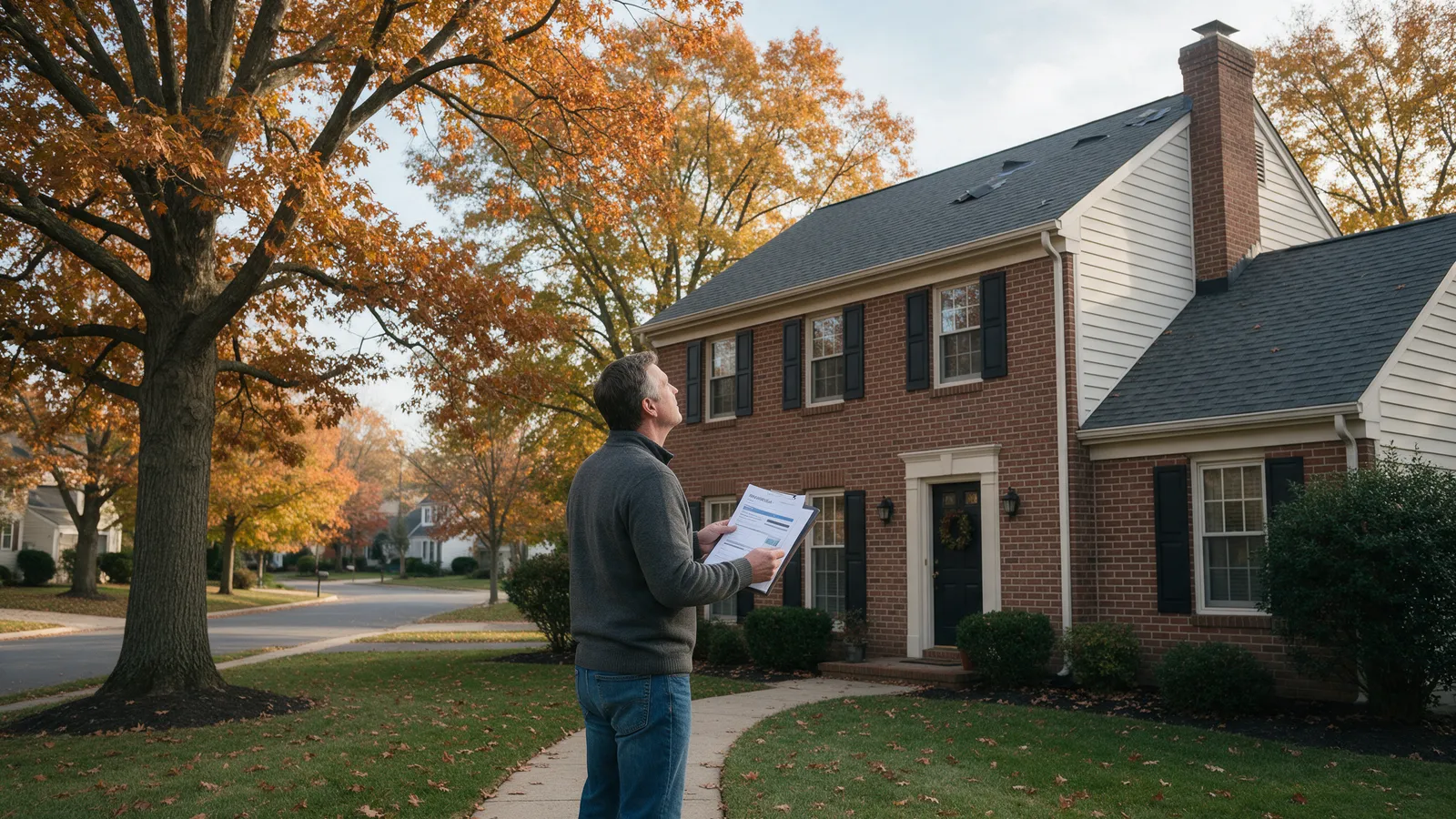
Start with paperwork, not guessing. Look through your closing documents, past invoices, and any permit records. Many local permitting offices keep records of past roofing permits by address, so a call or an online search can confirm a date.
If you bought the house and there is no paper trail, ask the seller’s agent, neighbors with matching rooflines (rowhouse blocks were often re-roofed together), or your insurance carrier. Note that a roof may have been layered over an older one, so “installed in 2009” does not always mean the whole system is that age.
Step 2: Identify what you have from the ground
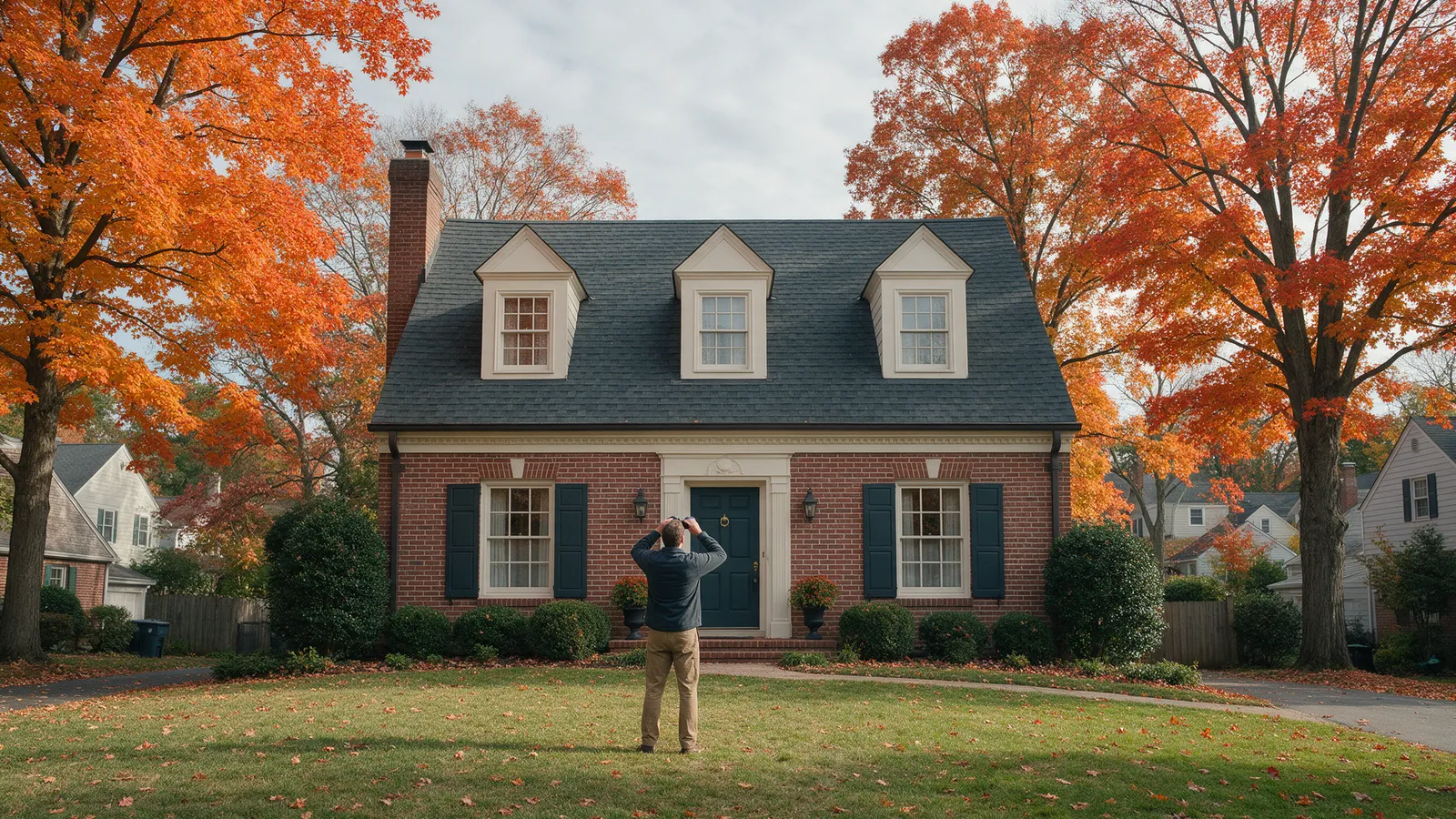
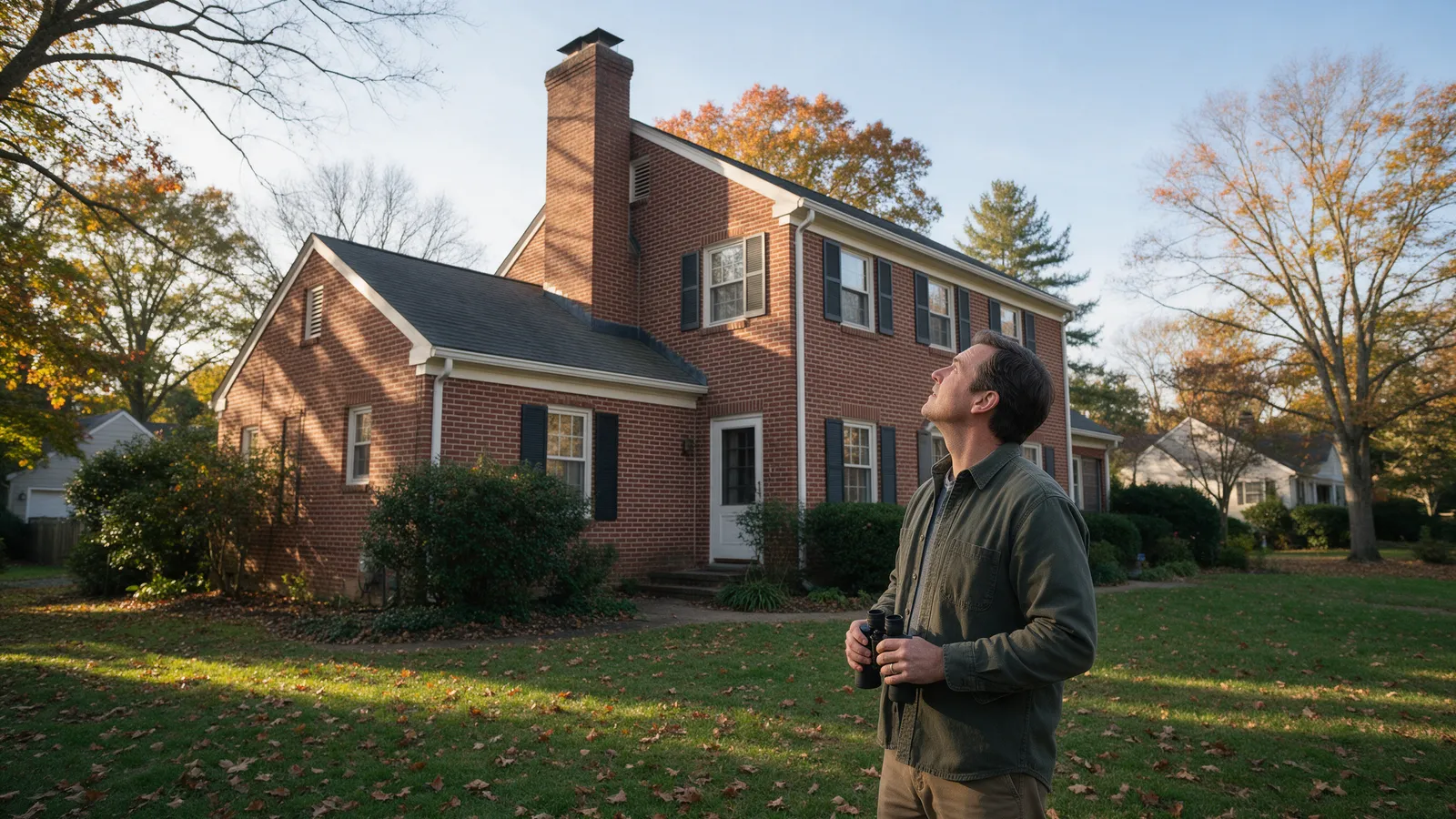
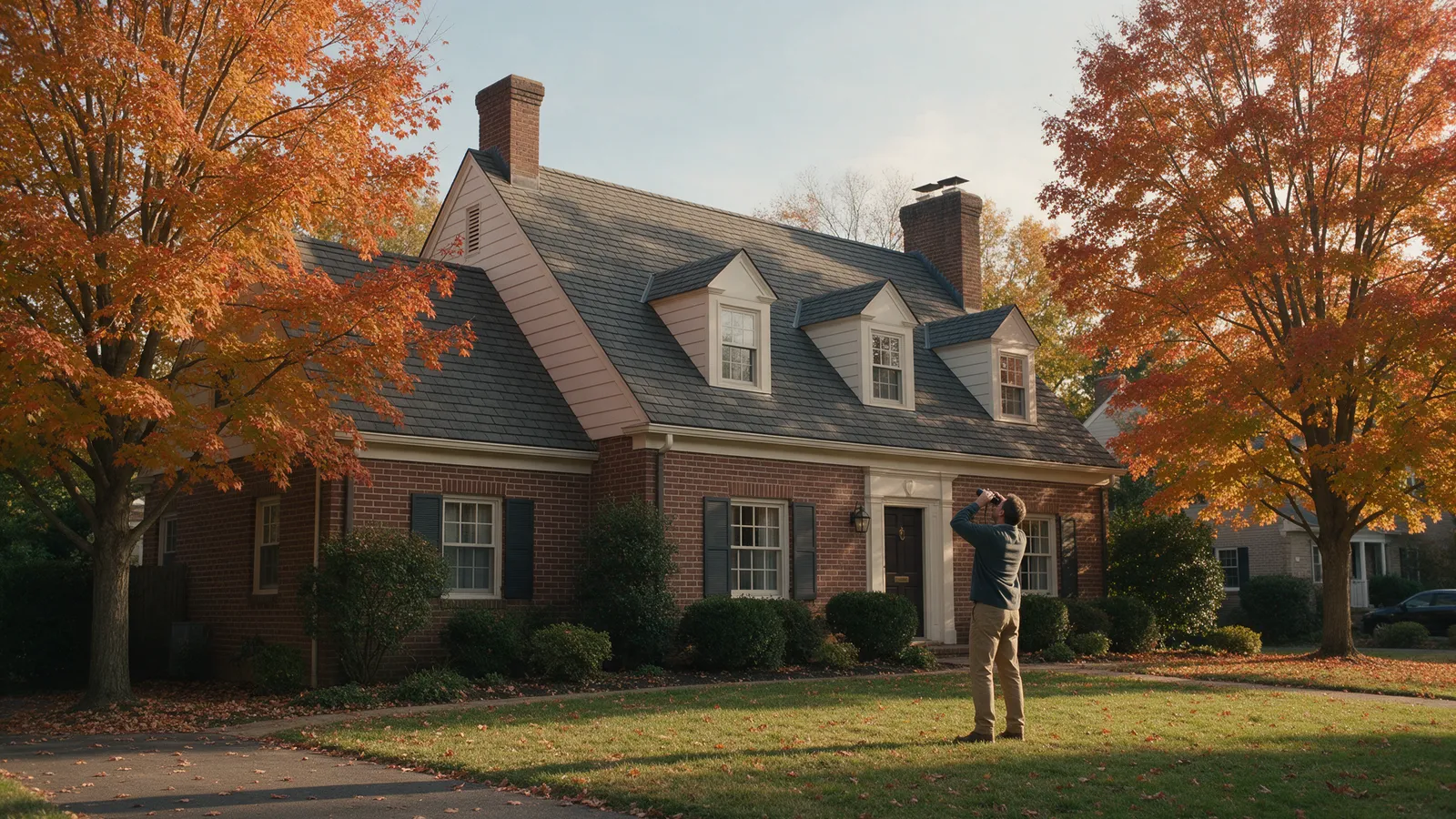
Use binoculars from across the street. Asphalt shingles show a granular, sandy texture and visible tab cutouts or a thicker laminated look. Metal shows long straight panels with vertical ribs. Slate looks flat, slightly uneven in thickness, and has a stony, matte face with sharp horizontal lines.
If you cannot tell, take a zoomed photo and ask a roofer to identify it during an inspection. Do not climb up to check. Synthetic and fiber-cement products can imitate slate closely, and the lifespan story is different for each.
Step 3: Read the warning signs for asphalt
Asphalt wears out in recognizable ways. From the ground, look for:
- Curling or cupping at the shingle edges
- Bald or shiny patches where the granules have worn off
- Missing shingles or visible gaps in the pattern
- Dark streaks, which are often algae and mostly cosmetic
Check your gutters and downspout outlets for a heavy buildup of granules that looks like coarse sand. A small amount is normal on a newer roof, but a thick layer paired with bald patches points to an aging roof. Our fall gutter and roof check walks through that inspection in more detail.
Step 4: Read the warning signs for metal
Metal fails differently, and the problems are often at the details rather than the panels.
- Backed-out or rusty fasteners on exposed-fastener roofs
- Dried, cracked sealant at seams, vents, and the chimney
- Chalky or faded paint, which is a sign the factory finish is wearing
- Dents from hail or fallen limbs
Because metal panels expand and contract with temperature, the fasteners and seals take the stress on exposed-fastener systems. That is the main reason cited for their shorter lives compared to standing seam.
Step 5: Read the warning signs for slate
Slate itself often outlives its fasteners. Traditional practice is copper or stainless steel nails, since ordinary steel nails can fail decades before the stone does. From the ground, look for:
- Slipped, cracked, or missing slates, often visible as dark gaps
- Slate chips or fragments in the gutters or on the ground
- Rusted or failing flashing at valleys and chimneys
Slate that is flaking in layers is a different problem from a loose nail, and only a specialist can tell them apart. Slate repair is not a job for a general roofer.
Step 6: Check the attic for what the roof can’t tell you
Go up into the attic with a flashlight on a dry day and look at the underside of the roof deck. You are looking for:
- Dark stains, especially around nails or near penetrations
- Damp insulation
- Daylight where there should be none
- Frost or mold on the sheathing in winter
Attic problems are often ventilation problems, and poor ventilation shortens the life of any material. Use our 10-minute attic ventilation check to see where you stand, and the guide to finding a leak from the attic if you spot staining.
Step 7: Match the material to your house
There is no best roof for every home. A few DMV-specific points:
- Rowhouses and flat or low-slope sections often use membrane systems rather than any of these three materials. The comparison above applies to steep-slope roofs.
- Heavy oak and maple canopy drops debris that holds moisture against asphalt and can scratch painted metal. Keep gutters and valleys clear regardless of material.
- Older homes with slate may have framing built for that weight. Switching to or from slate changes the load, so structure matters.
- Historic districts in DC and in many Maryland and Virginia localities can limit which materials you may use. Ask before you get attached to a product.
A rough diagnostic table helps if you are weighing repair against replacement:
| What you see | Likely meaning | Next move |
|---|---|---|
| A few missing asphalt shingles, roof under 15 years | Wind or storm damage | Repair by a pro, check for others |
| Widespread curling and bald spots, roof near 20+ years | End of service life | Get replacement quotes |
| Rusted fasteners on exposed-fastener metal | Fasteners failing, not necessarily the panels | Pro can re-fasten and re-seal |
| A few slipped slates on a sound slate roof | Failed nails or isolated breakage | Slate specialist repair |
| Stains in the attic with no shingle damage visible | Flashing or ventilation problem | Have a pro locate the source |
Step 8: Think in cost per year, not sticker price
Divide the installed price by the expected years of service. A cheaper asphalt roof replaced twice can cost more than one metal roof that lasts decades, but only if you stay in the house long enough to use that life. Prices vary widely with roof size, pitch, and access, so get at least two written quotes that spell out the materials, underlayment, flashing, and tear-off. We are not quoting a price here because any single figure would be a guess.
Also ask about warranties and read what they actually cover. Manufacturer warranties on materials often exclude labor, and workmanship warranties come from the installer.
When to stop and call a professional
Call an insured roofer if you notice any of the following, and do not walk on the roof yourself:
- Active leaks or water stains on a ceiling
- Sagging roof lines or soft spots visible from outside
- Large areas of missing or damaged material after a storm
- Any problem at a chimney, skylight, valley, or other penetration
- Anything on a second story or higher, which includes using a ladder to reach it
Roof work is structural, it involves falls from height, and it can involve nearby power lines. Slate and metal installation in particular need trained crews. A professional can also tell you whether a roof needs repair or replacement and can check your framing before you change materials.
Where to go next
If you want a professional opinion on your roof’s remaining life, start with our roofing services page, then check the areas we serve for your jurisdiction. After a storm, our storm damage guide explains what to document for your insurer. Keeping gutters clear also extends roof life, so see our gutter guards comparison if trees are your problem.
Common questions
How long does an asphalt shingle roof last in the DC area?
Published estimates run from roughly 15 to 30 years, with basic three-tab shingles at the short end and architectural shingles at the long end. Local conditions shift that number: summer heat, poor attic ventilation, and heavy tree cover all tend to shorten it. Treat the range as a planning guide, not a warranty.
Is a metal roof worth it if I may sell in ten years?
It depends on your market and the roof you have now. Metal's main advantage is a long service life, which pays off most for people who stay put. If you plan to sell soon, ask a local agent how buyers in your neighborhood value roof type, and get at least two written quotes before deciding.
Can my house structurally support a slate roof?
Slate is far heavier than asphalt, and weight varies a lot with the thickness of the slate. Published figures per roofing square differ widely between sources, so there is no safe rule of thumb. A structural engineer or an experienced slate roofer must check your framing before any slate is ordered.
Do I need a permit to replace my roof with a different material?
Often yes, and the rules differ between DC, each Maryland county, and each Virginia jurisdiction. Historic districts can add review requirements on top of the permit. Ask your local permitting office before you sign a contract, and ask your roofer who is pulling the permit.
A note on safety
This guide is general information for homeowners, not a substitute for an on-site assessment. Anything that puts you on a roof, above a single story, or near power lines is work for an insured professional with fall protection.