Every roof owner eventually asks the same question: patch it again, or pay for the whole thing? The honest answer comes from a handful of observations, most of which you can gather from the lawn and the attic hatch. This guide helps you collect that evidence, read it, and walk into a contractor conversation prepared.
What you’ll need
- Binoculars
- A flashlight or headlamp
- A phone for dated photos
- A notepad for the roof’s history (install year, past repairs, past leaks)
- Your roof paperwork, if you have it: invoices, warranty, permit
Step 1: Pin down the roof’s history
Find out what you actually have before you judge it. Age and layer count drive most of this decision.
- Install year. Look for an old invoice or permit, or ask your insurer or the prior owner. Many DC and Maryland jurisdictions keep permit records you can request.
- Material. Three-tab asphalt, architectural asphalt, metal, slate, and flat membrane roofs all age differently. Our roof material lifespan comparison covers typical ranges.
- Number of layers. At the roof edge, rake, or a vent you can see from the ground, you can sometimes spot a doubled shingle edge. This matters later, so note what you see and confirm with a roofer.
- Past repairs. Patched areas, mismatched shingle colors, and heavy sealant around penetrations are all clues that the roof has been repaired before.
Step 2: Read the surface from the ground
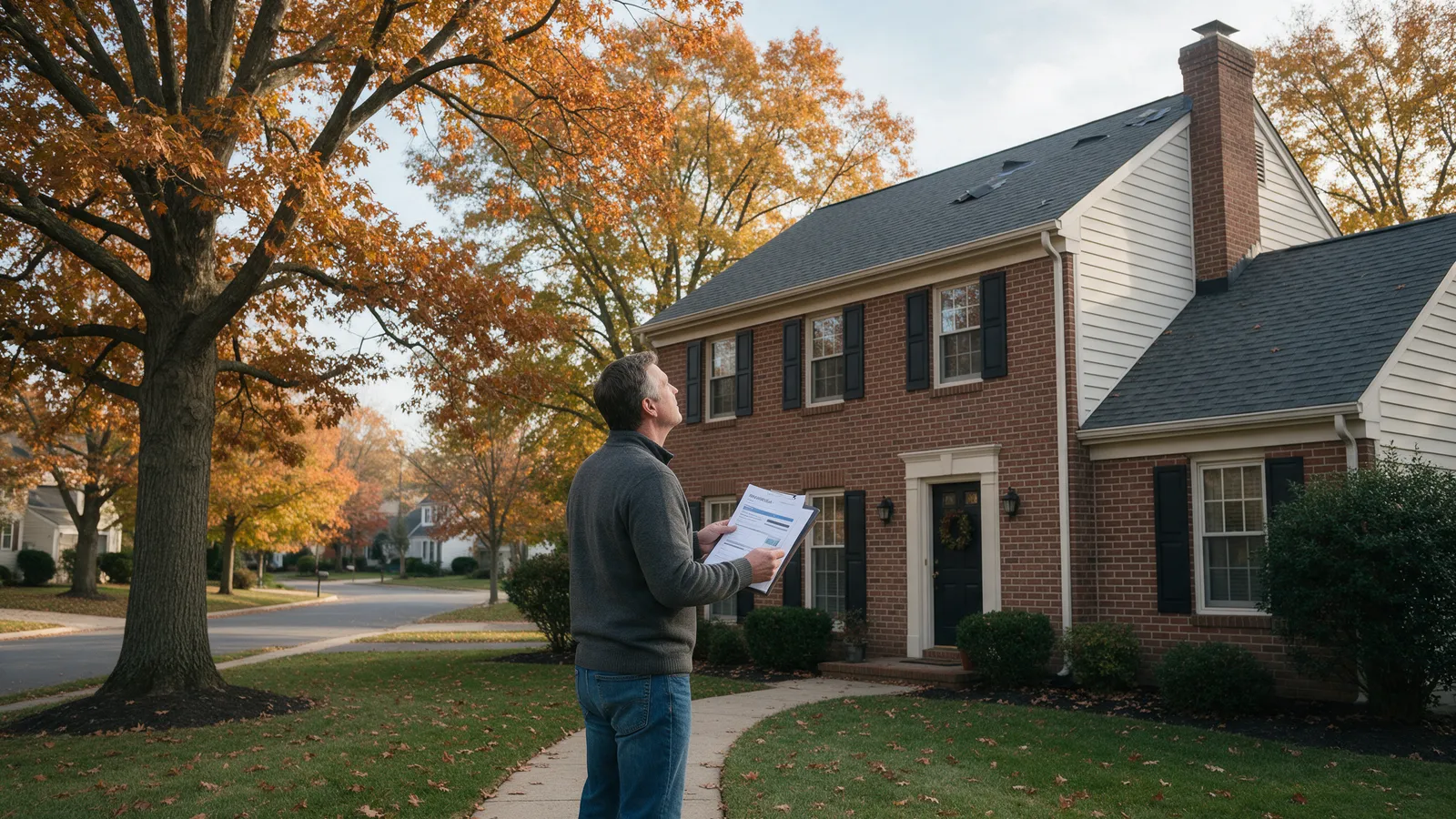
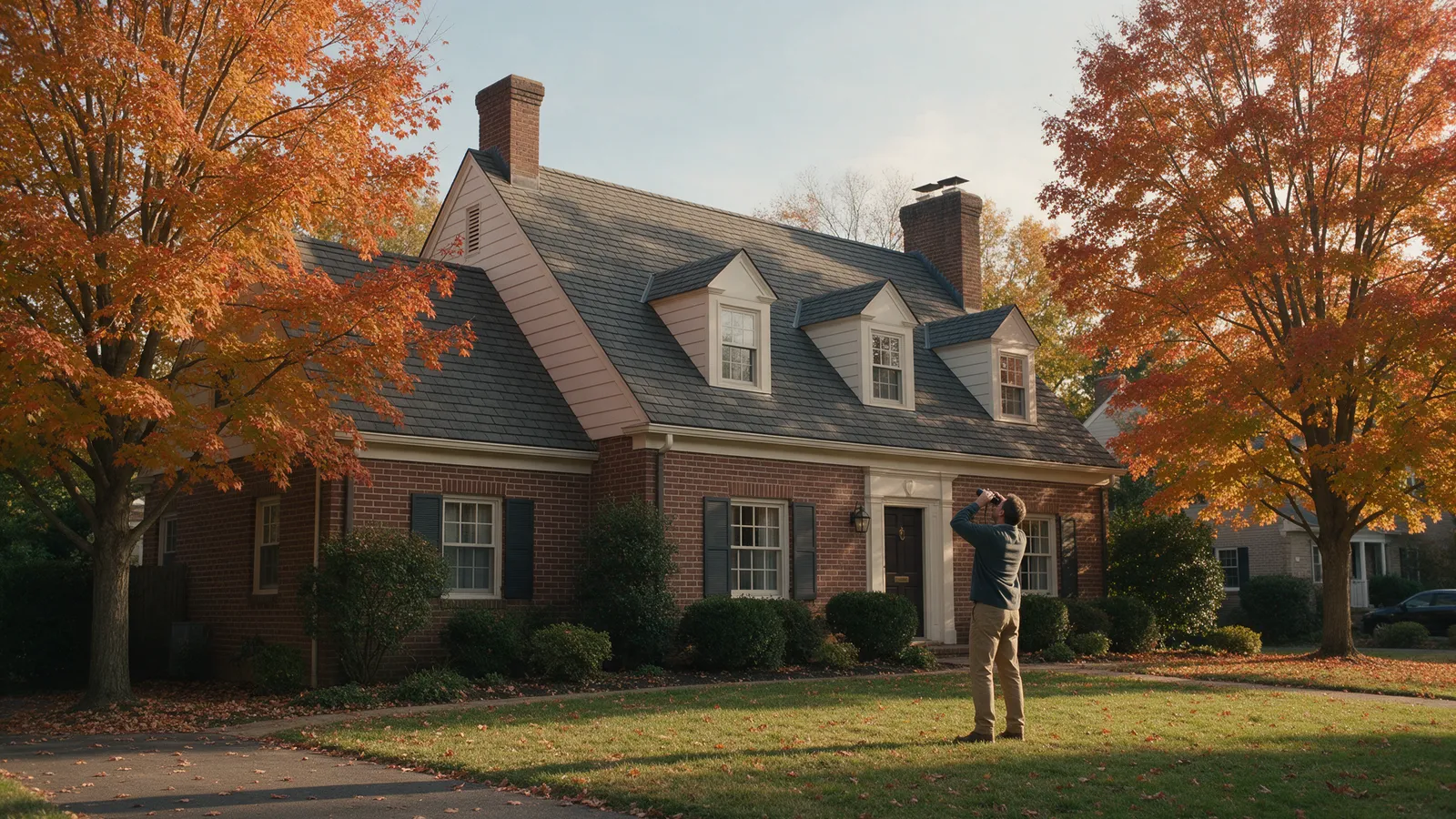
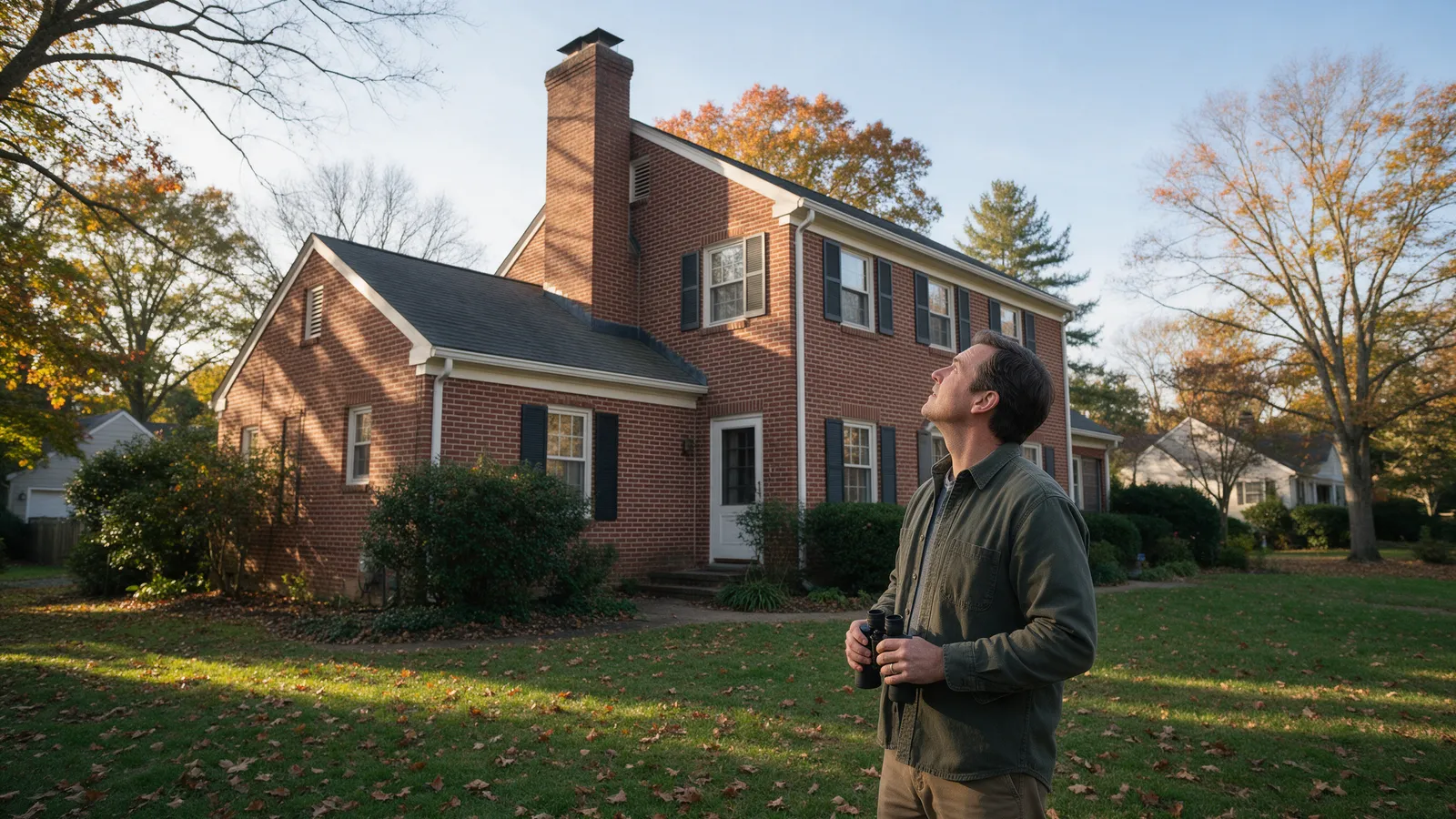
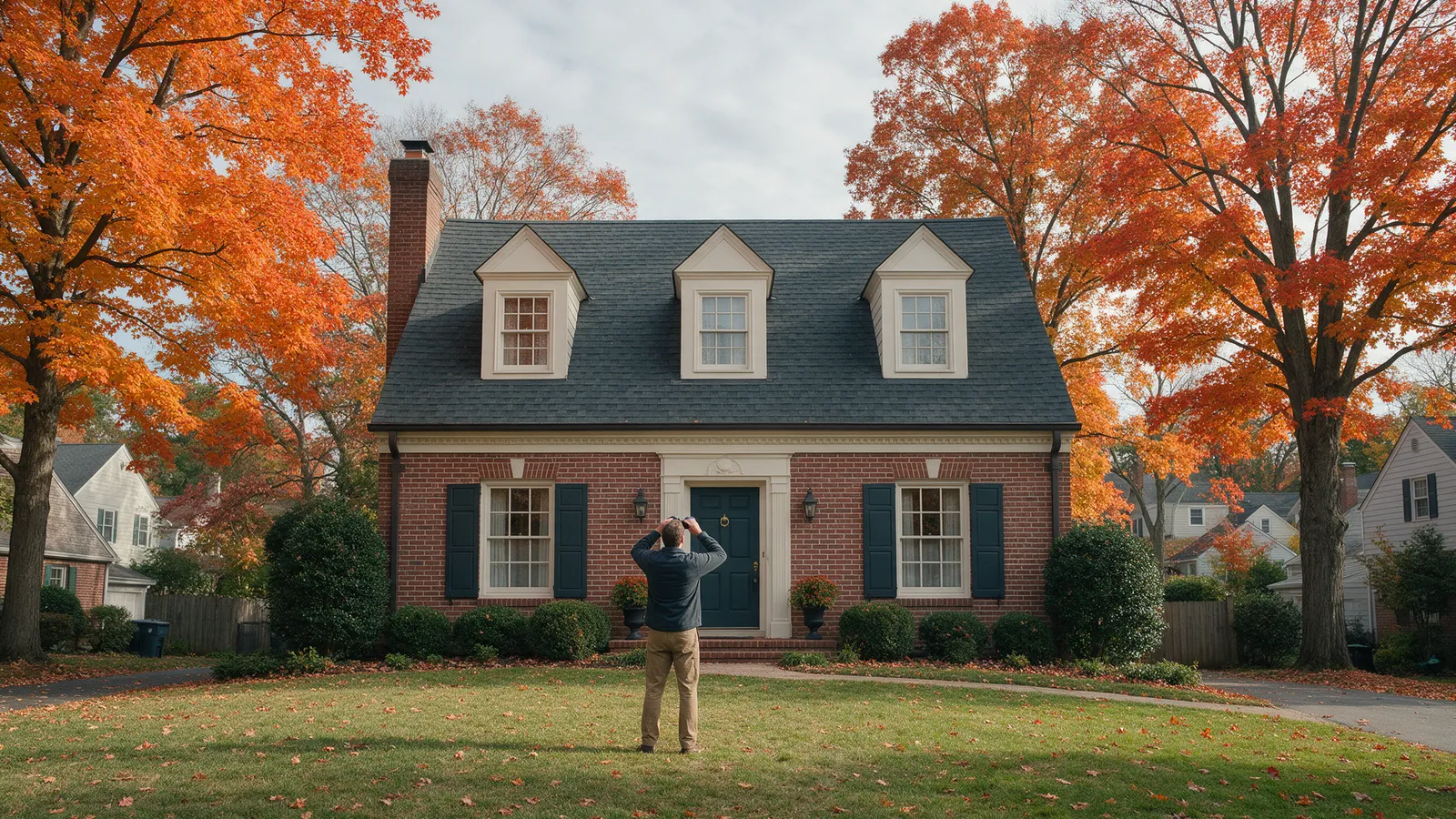
Use binoculars from a few angles around the house. Never climb onto the roof for this. Photograph each slope and note what you see.
| What you see | What it often means | Leans toward |
|---|---|---|
| A few missing or creased shingles in one spot | Wind or storm damage in a small area | Repair |
| Shingles lifting or curling at edges across a whole slope | Age and heat cycling | Replacement |
| Granules piled in gutters or downspout outlets | Surface wear, worse when widespread | Replacement if heavy |
| Bare, dark patches where granules are gone | Shingle surface failing | Replacement |
| Cracked or lifted flashing at a chimney or wall | Sealant or metal failure | Repair |
| Sagging ridge or wavy slope | Possible structural or decking issue | Call a pro now |
| Dark streaks or moss | Often cosmetic or moisture-holding growth | Cleaning or repair, depends |
Pay attention to where the damage sits. Damage concentrated on the windward side after a storm is a different story from wear spread evenly across every slope.
Step 3: Check the attic for what the surface hides
Use a flashlight to look at the underside of the roof deck. Our guide on finding a roof leak from the attic walks through the technique in detail.
Look for:
- Dark, stained, or rusty nail tips. Often a sign of moisture or condensation over time.
- Stains that are old and dry versus fresh and damp. Old, dry rings may be a past leak that was fixed. Damp wood is active.
- Sagging or soft-looking sheathing. Press lightly with a gloved hand only where you can safely reach from the hatch or a joist-supported spot. Soft, spongy wood suggests rot.
- Daylight through the boards. Small pinpoints near vents are common to see; larger gaps are not.
Roofing sources often say that when a large share of the decking is damaged, replacement makes more structural sense than patching. Where that line falls is a call for the person who can see the whole deck.
Step 4: Weigh the rules of thumb, carefully
You’ll hear a few rules repeated. They are guidance from the industry, not code.
- The 30 percent idea. Some contractors suggest that a roof with about 30 percent or more of its surface damaged is a replacement candidate, and that repair is more reasonable below that if the roof is fairly young.
- The cost idea. Another common heuristic is to lean toward replacement when repair estimates approach roughly a quarter of the cost of a new roof.
- The count-your-repairs idea. If you’ve repaired the same roof two or three times in a few years, the next patch is probably not the last.
These are conversation starters. A 12-year-old roof with one clean storm-damage area can be a perfect repair, while a 22-year-old roof with a “small” leak might be showing you the first of many.
Step 5: Understand the layer rule
Count your layers, because it can decide the job for you. The model residential building code (the IRC) does not allow a roof recover where the existing roof already has two or more applications of roof covering, where it is water soaked or too deteriorated to serve as a base, or where it is certain tile or slate. It also calls for replacement to remove existing coverings down to the deck.
In practice, a roof with two layers generally needs a full tear-off. Local jurisdictions can adopt or amend the code, so ask your permit office or contractor what applies in your city or county. Our roofing page is a good place to start for local context.
Step 6: Consider the non-roof factors
The roof is not the only variable.
- How long will you stay? A few years to go, and a clean repair may be enough. Planning to stay a decade, and a replacement spreads its cost over many more years.
- Insurance. Some carriers ask about roof age or condition, and older roofs can mean higher premiums or tougher renewals. Call your agent and ask what they need to see.
- Storm history. If a recent storm caused the damage, document it first. Our page on storm damage explains how to approach the claim process.
- Ventilation and ice dams. If the roof has been failing early, poor attic ventilation may be the culprit. See our attic ventilation check before paying for a new roof that will fail the same way.
Step 7: Get two or three written estimates
Ask each roofer to write down both options. A repair scope with photos, and a replacement scope with materials, underlayment, flashing, ventilation, and tear-off, priced separately so you can compare.
A good contractor will walk the roof, look at the attic, and explain what they saw. Be wary of anyone who pushes a full replacement from the curb in thirty seconds, or who offers a repair without looking at the flashing. Verify the contractor’s license and insurance with the state or district before signing. We leave dollar figures out here, because quotes vary a lot by roof size, pitch, access, and material. Compare written scopes line by line instead.
When to stop and call a professional
Do not walk on the roof. Do not climb above one story on a ladder. Stop and call an insured roofer if you see:
- Active leaks, or ceiling stains that are damp or growing
- A sagging roofline or ridge
- Soft, spongy, or rotted decking
- Daylight visible through the roof boards
- Damage after a major storm, falling limb, or fire
- Any work near power lines or the service drop
Everything above the first story, and everything on the roof surface itself, is work for an insured professional. This article is for gathering evidence from safe positions, not for doing the repair.
Putting it together
Repair makes sense when the roof is reasonably young, the damage is localized, the decking is dry and sound, and you have one layer. Replacement makes sense when wear is widespread, repairs keep recurring, the decking is compromised, or you already have two layers. In between, a written second opinion is cheap insurance.
When you’re ready to compare options, our roofing services page outlines how we approach inspections, our storm damage page covers insurance-related work, and the areas we serve page lists the DC, Maryland, and Northern Virginia communities we work in. For a closer look at what can go wrong around a chimney, read our guide to spotting chimney flashing problems, then call DMV Exterior at 202-798-7663 to schedule an inspection.
Common questions
Is there a rule for when to repair a roof and when to replace it?
There is no building-code rule for this, only rules of thumb. Roofing sources often suggest replacement when roughly 30 percent of the roof is damaged, or when repairs would cost around a quarter of a new roof. Treat those as conversation starters with a contractor, not hard lines, because the roof's age, the condition of the decking, and the cause of the damage matter more.
Can a new layer of shingles go over my old ones?
Sometimes. The model residential code allows a single layer of flat, sound shingles to be recovered in some cases, but it does not allow a recover over a roof that already has two layers, one that is water soaked, or certain tile and slate roofs. Many contractors tear off anyway so they can inspect the deck. Check with your local permit office, since jurisdictions can amend the code.
Will a repair void my shingle warranty?
It depends on the manufacturer and who did the work. Many warranties exclude damage from improper installation, and a repair by an unlicensed or unqualified person can complicate a claim. Ask your roofer to document the repair with photos and keep the paperwork with your warranty and receipts.
My roof is leaking in one spot. Is that a repair or a replacement?
A single leak at a vent pipe, chimney, or skylight is most often a flashing or sealant failure, which is a repair. The picture changes if the leak is just one of several, if the shingles are brittle or shedding granules widely, or if the decking is soft. A professional inspection of the roof surface and the attic is how you tell the difference.
A note on safety
This guide is general information for homeowners, not a substitute for an on-site assessment. Anything that puts you on a roof, above a single story, or near power lines is work for an insured professional with fall protection.