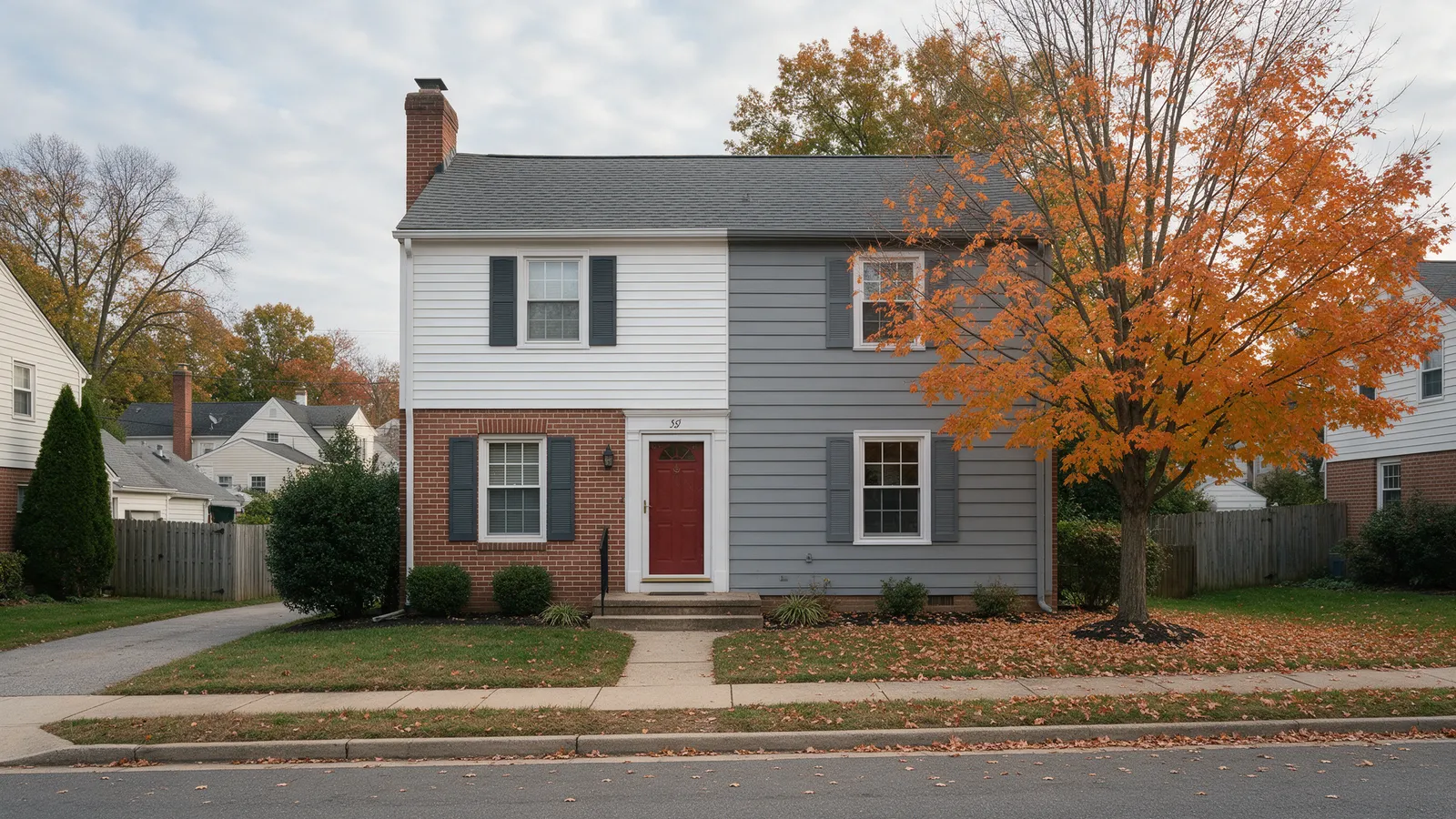
Choosing between vinyl and fiber cement siding is mostly a question of what you want to maintain, and what your house will put the siding through. Neither material is “best” in general. Here is a plain way to compare them for DC, Maryland, and Northern Virginia homes, and how to check what is on your walls right now.
What you’ll need
- Binoculars
- A garden hose and a soft brush
- A flashlight
- A small magnet (helps tell some metal trim from other trim)
- Painter’s tape and a phone camera for marking and logging problem spots
Step 1: Know what you’re comparing
Vinyl is extruded PVC. The color runs through the panel, it needs no paint, and it is the lower-cost option up front. It expands and contracts with temperature, which is why it is hung loose on the wall instead of nailed tight.
Fiber cement is a mix of cement, sand, and cellulose fibers, cut into planks and shingles. It is heavier and stiffer, holds paint well, and can mimic wood grain. Most of it is painted, either at the factory or on site.
Both are rain screens in practice: they shed water, but the weather barrier behind them does the real waterproofing. That matters more than the face material, so keep it in mind throughout.
Step 2: Match the material to our weather
The DMV swings from humid summers to freeze-thaw winters, with the occasional nor’easter in between. Here is how that tends to play out.
| Condition | Vinyl | Fiber cement |
|---|---|---|
| Freeze-thaw cycles | Stiffer and more brittle in the cold; impacts can crack it | Stable in temperature swings; edges can wick water if left unsealed |
| Humid summers | Resists rot; mildew shows as green or black film | Resists rot when painted and sealed; mildew grows on dirty paint |
| Summer heat and reflected sun | Can warp if heat is trapped or reflected, for example from some low-e windows | Does not warp, but paint can chalk and fade |
| Falling branches and hail | Cracks or punctures | Chips, but is generally tougher |
| Wind-driven rain | Depends on the barrier behind it | Depends on the barrier behind it, and on caulked joints |
Under heavy oak and maple canopy, expect both to get a green film on the shady north side. That is a cleaning issue, not a material failure.
Step 3: Compare upkeep honestly
- Vinyl: wash once or twice a year. No paint. Cracked panels are replaced individually, which is a decent DIY job on the first floor if the panel is still sold in your profile and color.
- Fiber cement: wash, then repaint. A common guideline is every 10 to 15 years, shorter on sun-baked south and west walls. Joints and trim need caulk that you will refresh along the way.
Fading is the quiet cost of vinyl. Colors can lighten unevenly over the years, so a replacement panel may not match. On painted fiber cement, a repaint resets the whole wall’s color.
Step 4: Diagnose the siding you already have
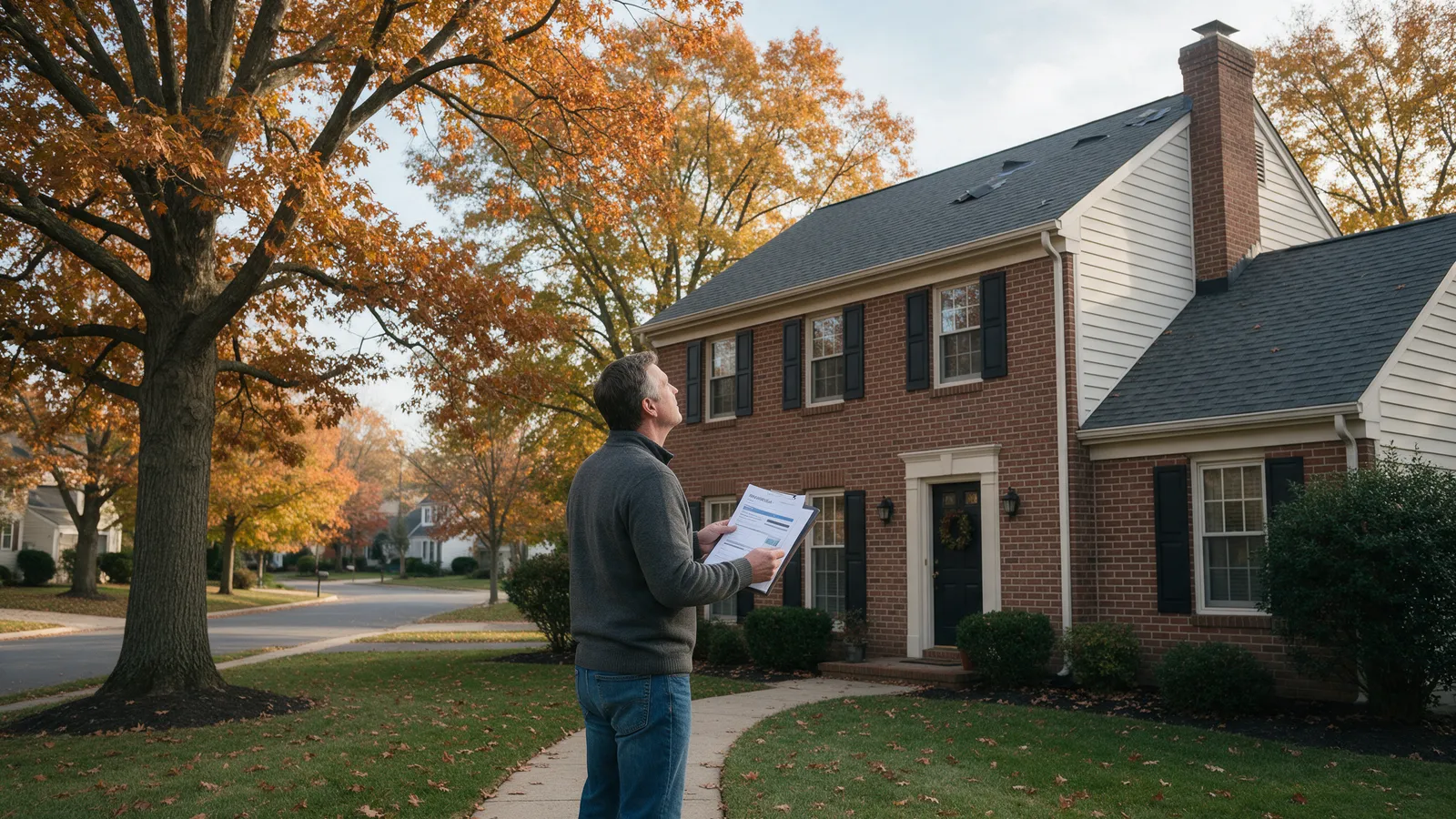
Do this from the ground, with a hose and a flashlight. Stay off ladders above the first floor.
- Walk the house with binoculars. Look for cracked, buckled, or loose vinyl panels. On fiber cement, look for peeling paint, swollen lower edges, and cracks along butt joints.
- Press gently at the bottom edge. Soft or crumbly material near the ground, or under window sills, suggests water getting in.
- Check where siding meets trim, windows, and the roofline. Failed caulk here is the most common leak path on both materials.
- Look for waves. Rippled vinyl is often nailed too tight or has been heated. It is a cosmetic problem until it starts letting water behind it.
- Photograph and date everything. A phone gallery of problem spots helps when you get quotes or file a claim.
| What you see | Likely cause | Next step |
|---|---|---|
| Wavy or buckled vinyl | Nailed too tight, or heat | Watch it; ask a contractor if it spreads |
| Peeling paint on fiber cement | Aging paint or moisture behind it | Scrape, prime, repaint; investigate moisture |
| Soft spot at the bottom edge | Water getting behind the siding | Stop and call a pro |
| Gap or open joint at trim | Failed caulk | Recaulk; see our window trim guide |
| Green film on the north side | Algae or mildew | Wash with a soft brush |
Step 5: Clean without making it worse
Wash gently. Use a hose, a soft brush, and a mild soap solution. Work from the bottom up so dirty runoff doesn’t streak, then rinse top down. A pressure washer can force water behind lap joints on either material, so keep it out of the picture.
Don’t use a ladder to wash upper floors. If the second story needs it, hire it out.
Step 6: Watch the details that decide how long siding lasts
Siding rarely fails because of the board. It fails at the edges.
- Flashing over windows and doors. Missing or poorly lapped flashing sends water behind the siding.
- Clearance at the ground and at roof lines. Siding that touches soil, mulch, or a roof surface wicks moisture.
- Gutters. An overflowing gutter soaks the wall below it. If you see streaks under the gutter line, start with the gutter guard guide.
- Fasteners. Vinyl should float; fiber cement should be nailed or screwed per the maker’s instructions, not overdriven.
Step 7: Understand the cost question without a number
Vinyl generally costs less to install. Fiber cement generally costs more to install and more to maintain, because of paint, but may last longer. Prices vary a lot with house size, trim work, and how much old material has to come off, so get at least two written, itemized quotes before deciding. Be wary of any quote that skips the weather barrier and flashing.
When to stop and call a professional
Call an insured siding or exterior contractor when:
- Siding is soft, spongy, or crumbling near the ground, windows, or roofline. There may be rot in the sheathing behind it.
- You see water stains inside along an exterior wall or window.
- Damage is above the first floor. Don’t work from a ladder above one story, and never near power lines.
- Panels are missing or loose after a storm.
- You’re replacing siding. Cutting fiber cement produces fine dust that can contain respirable silica. Professionals use dust-controlled cutting methods and respirators, so this is not a casual weekend project.
- The home is older. Houses built before 1978 may have lead paint, and some very old materials can contain asbestos. Have it tested before scraping, sanding, or cutting.
The short version
Choose vinyl if you want the lowest upfront cost and no painting. Choose fiber cement if you want a heavier, paintable look and are ready for a repaint cycle. Either one only works as well as the barrier, flashing, and caulk behind it.
If you want a second opinion on what is on your walls, see our siding services, look at storm repairs under storm damage, or check the areas we serve. Before winter, our fall gutter and roof check is a good companion read.
Common questions
Which lasts longer, vinyl or fiber cement siding?
Fiber cement is generally cited as the longer-lived material, often in the range of 40 to 50 years or more, while vinyl is commonly cited at roughly 20 to 40 years. Real lifespan depends on installation quality, sun exposure, and upkeep. Treat any single number as a rough guide, not a promise.
Does fiber cement siding need to be repainted?
Usually, yes. Painted fiber cement commonly needs repainting every 10 to 15 years, though factory-applied finishes can stretch that. Vinyl is colored all the way through and does not need paint, only washing. Caulk joints on either material still need checking.
Can I put new siding over old siding?
Sometimes, but it can hide rot and trapped moisture underneath, and it changes how trim, windows, and flashing sit. Many homeowners are better served by removing the old siding and looking at the wall behind it. A siding contractor can tell you which applies to your house.
Is vinyl siding bad in cold weather?
Vinyl gets stiffer and more brittle as temperatures fall, so a hard impact in a freeze can crack it where it would only dent in summer. Installers also avoid nailing it in freezing weather. Existing vinyl is fine through winter, but be gentle with ladders and ice.
A note on safety
This guide is general information for homeowners, not a substitute for an on-site assessment. Anything that puts you on a roof, above a single story, or near power lines is work for an insured professional with fall protection.