Most Maryland homeowners don’t know the Guaranty Fund exists until a roofer disappears with a deposit. It’s a state-run fund that can repay you when a licensed home improvement contractor does unworkmanlike, incomplete, or abandoned work. The protection is real, but it only works if you set yourself up for it before the job starts.
This guide covers what the Fund pays, who qualifies, and the one-hour paperwork routine that keeps your claim strong if a roofing, siding, window, or gutter job goes wrong.
All figures below come from the Maryland Home Improvement Commission’s (MHIC) published Guaranty Fund FAQ. Rules change, so confirm current limits with MHIC before relying on them.
What the Fund is (and isn’t)
The Guaranty Fund is administered by MHIC, part of the Maryland Department of Labor. It’s paid for by licensed contractors through an assessment when they get and renew their license. It reimburses homeowners for “actual loss”: what it costs to restore, repair, replace, or complete work that was done poorly or abandoned.
It is not insurance for everything that can go wrong. Here’s the short version:
| Situation | Covered by the Fund? |
|---|---|
| Licensed roofer abandons the job after taking a deposit | Generally yes, up to the limits |
| Licensed contractor installs siding so badly it must be redone | Generally yes, the cost to correct it |
| Contractor was unlicensed | No |
| Water damage to your ceiling, furniture, or flooring caused by a bad roof job | No (consequential damage isn’t covered) |
| Your attorney’s fees and court costs | No |
| Upgrades you add during the fix that weren’t in the original contract | No (claims padded this way can be dismissed) |
| Claimant is the contractor’s spouse, relative, employee, or partner | No |
The consequential-damage exclusion surprises people. If a botched re-roof leaks and ruins a bedroom ceiling, the Fund looks at the cost to fix the roof work, not the bedroom. Your homeowner’s insurance policy is where you’d look for the interior damage.
How much it pays
MHIC’s limits:
- $30,000 per claimant, or the amount you paid the contractor, whichever is less. If you paid a $9,000 deposit and the roofer vanished, $9,000 is your ceiling.
- $250,000 total per contractor. If approved claims against one contractor exceed that, everyone is paid the same percentage of their award.
- Claims of $7,500 or less may be approved by proposed order without a hearing. Larger claims may be scheduled for a hearing.
On a full re-roof or whole-house siding job, the cost to correct can exceed $30,000. The Fund is a backstop, not full protection, which is why MHIC contracts must tell you about your right to buy a performance bond for extra coverage.
Who can file
You can file if you live in the home the claim is about, or if you own no more than three residences. Spouses and immediate relatives of the contractor, and the contractor’s employees, officers, or partners (and their relatives), can’t.
The deadline is three years after you discovered the loss, or should have discovered it with ordinary diligence.
What you’ll need
Set this up before the first nail goes in. It takes about an hour.
- The contractor’s MHIC license number and a printout or screenshot of their license lookup
- The signed written contract and every change order
- Proof of every payment (cancelled checks, card statements, or bank transfers, not cash)
- Dated “before” photos of the work area
- A folder (paper or cloud) labelled with the job address and contractor name
Step 1: Verify the license before you sign
Look up the contractor on the Maryland Department of Labor license search and confirm the MHIC license is active. Match the name on the license to the company name on the proposal. A “we’re licensed” on a yard sign or truck door isn’t proof.
If a salesperson sold you the job, they need their own MHIC salesperson license too, and their name and license number belong on the contract.
This step matters more than any other. No license, no Guaranty Fund. If something goes wrong with an unlicensed contractor, you’re left with small claims or civil court.
Step 2: Read the contract for the required parts
Maryland requires home improvement contracts to include, among other things:
- The contractor’s name, address, phone number, and MHIC license number
- A notice with MHIC’s contact information, a description of the Guaranty Fund, and your right to buy a performance bond
Check that those items are on the page before you sign. If they’re missing, ask why. A contractor who works in Maryland regularly will know these requirements.
Also look for an arbitration clause. If your contract has a binding one, MHIC says you must make a good-faith effort to arbitrate before the Fund can pay, though you can still file your claim before or during arbitration and must stay within the three-year window.
Step 3: Keep the deposit within the legal limit
MHIC says a contractor can’t take more than one-third of the contract price as a deposit, and can’t take any payment before the contract is signed. On a $24,000 roof, that’s $8,000 at most up front.
Pay by check or card, never cash. Your payment records set your Fund ceiling (it’s capped at what you paid), so a cash payment you can’t prove is money you may never recover.
After the deposit, tie payments to visible progress: materials delivered, tear-off done, and so on. That’s negotiable between you and the contractor.
Step 4: Photograph the job as it goes
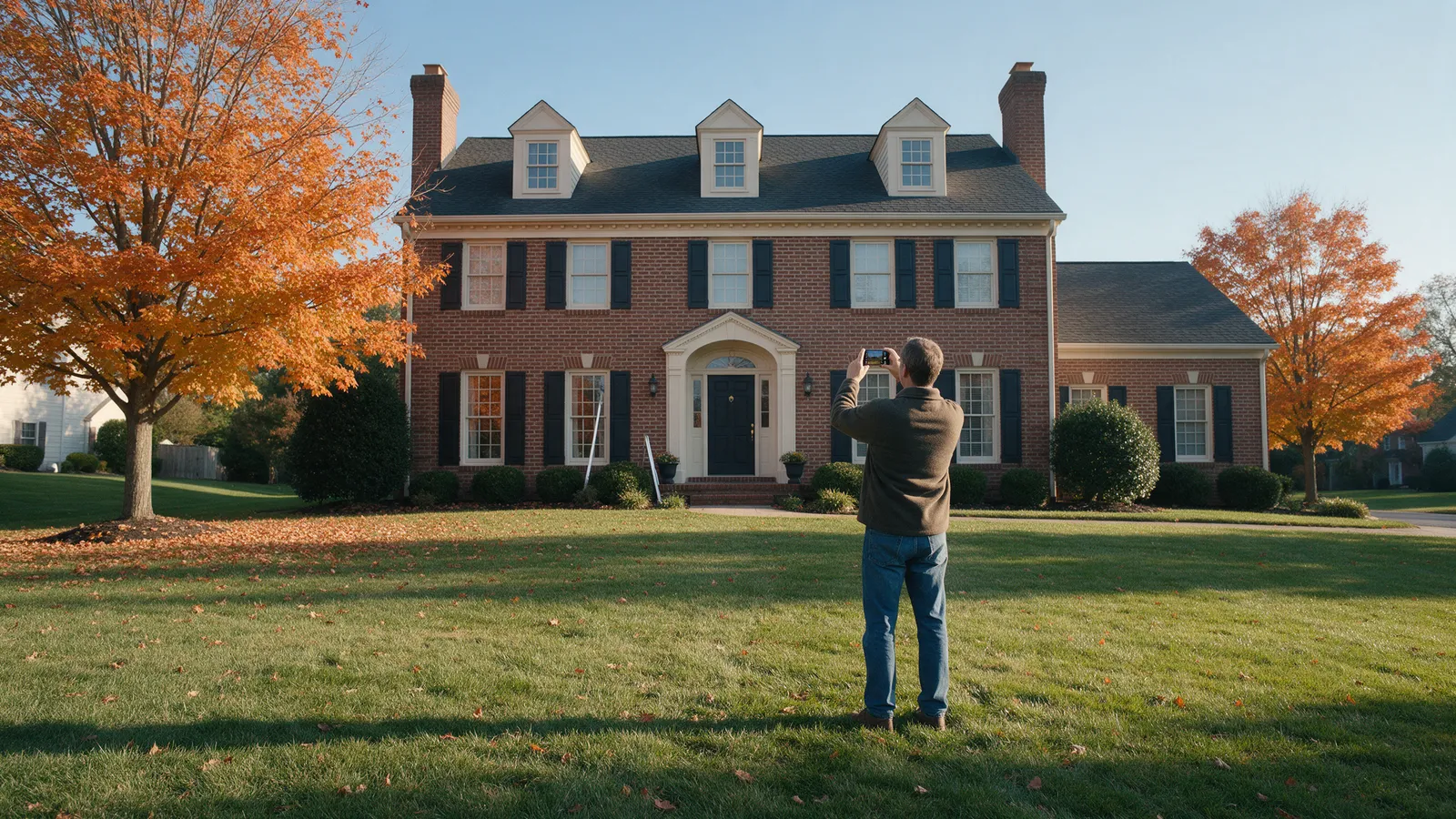
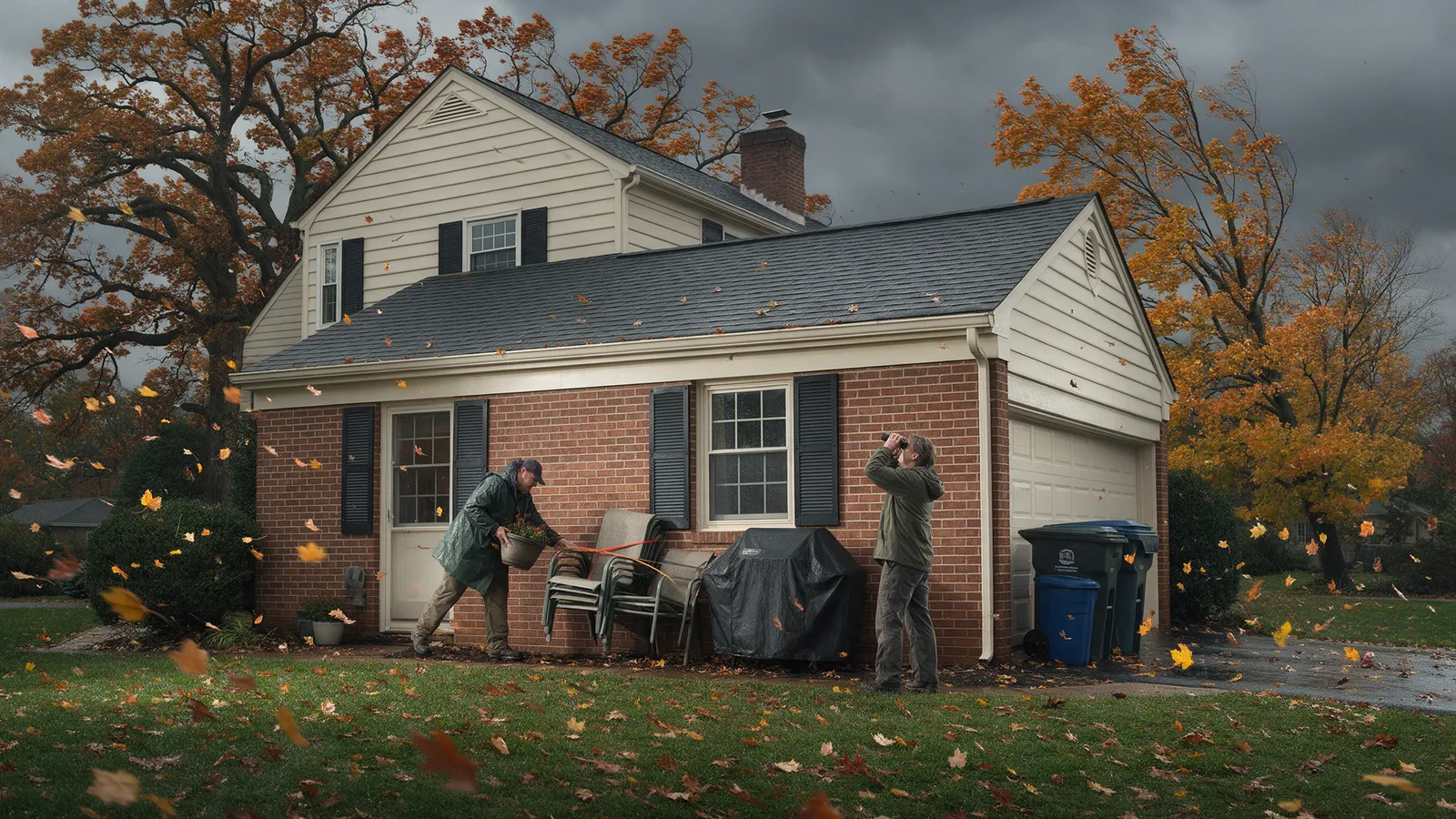
Take dated photos at each stage you can see safely from the ground or a window. You don’t need to climb anything. Use your phone’s zoom or a pair of binoculars for roof work, and step back to the street for siding and gutters.
Good moments to capture:
- The existing condition before work starts
- Material delivery (brand and product labels on the bundles or boxes)
- Tear-off day, if you can see exposed decking from the yard
- Daily progress, especially if crews stop showing up
- The finished work, before you make the final payment
Our guide on photographing your home’s exterior for insurance walks through angles and file naming that work for both insurers and MHIC.
Never climb onto the roof to check the work. If you need a closer look, hire an independent licensed contractor or home inspector to inspect it.
Step 5: If the job goes wrong, follow MHIC’s order
The process has two separate forms, and people often confuse them:
- Try to resolve it in writing first. Send the contractor a dated letter or email listing the problems and asking for a fix by a specific date. Keep a copy. MHIC can deny a claim if you unreasonably rejected the contractor’s good-faith efforts to fix it.
- File a complaint with MHIC. This starts an investigation into whether the contractor broke the Home Improvement Law.
- Complete the claim form if MHIC sends one. If the complaint isn’t resolved, MHIC sends you a Guaranty Fund claim form. Claim forms aren’t available online. The claim is submitted under oath.
- Attach your evidence. MHIC asks for the contract, change orders, payment records, photos, and two or three estimates from licensed contractors for the cost to correct or finish the work.
- Expect a long wait. MHIC says the process can be very lengthy because of a hearing backlog. It may prioritize habitability problems at a primary residence, especially for elderly, homebound, or limited-income homeowners.
Step 6: Fix urgent problems without wrecking your claim
A half-finished roof heading into a nor’easter can’t wait for a hearing. MHIC says repairing before the hearing won’t automatically hurt your claim, but you need to document the condition before any repair: an inspection report, photographs, and at least two bids from licensed contractors.
Then hire a licensed contractor for the fix. The Fund won’t reimburse money paid to an unlicensed contractor to correct or complete the work. Keep the second contract and proof of payment.
Keep the fix to what the original contract covered. If you upgrade from three-tab to architectural shingles during the repair, the upgrade portion isn’t actual loss, and a padded estimate can get a claim dismissed.
Diagnosis: where does your situation fall?
| What happened | Best first move |
|---|---|
| Contractor took the deposit and stopped answering | Written demand letter, then MHIC complaint |
| Work done but leaking or visibly wrong | Photos from the ground, independent inspection, written notice to contractor |
| Interior damage from contractor’s bad work | Homeowner’s insurance claim for the interior; MHIC for the cost to correct the work |
| Contractor turns out to be unlicensed | MHIC complaint (it’s still a violation), plus civil options; the Fund won’t pay |
| Contractor sued you first | Talk to an attorney; a counterclaim pauses the MHIC claim until court ends |
When to stop and call a professional
- Anything on the roof or above one story. Don’t inspect it yourself. Hire an insured, licensed contractor or home inspector to document the condition.
- Active leaks or exposed decking. Get an insured licensed roofer to tarp or dry-in the roof right away, and photograph everything first.
- Structural concerns, such as sagging rafters, soft decking, or damaged framing around new windows. That needs a licensed contractor and possibly an engineer.
- Lawsuits, arbitration, or a large claim. MHIC doesn’t represent you at a hearing. If the contractor sues or the dispute is complicated, talk to a Maryland attorney.
The takeaway
The Guaranty Fund is one of the stronger homeowner protections in the region, but it rewards preparation: a licensed contractor, a compliant contract, a deposit no larger than one-third, and payment records you can prove. If you’re planning work, start with our roof repair or replacement decision framework, then look at our roofing, siding, and windows pages and the Maryland communities we cover on our service areas page. Homeowners across the river can read how Virginia’s re-roof permit exemption works. Questions about a project? Call DMV Exterior at 202-798-7663.
Common questions
How much can I get from the Maryland Home Improvement Guaranty Fund?
According to the Maryland Home Improvement Commission, the maximum is $30,000 per claimant or the amount you paid the contractor, whichever is less. The Fund also caps total payouts on behalf of any one contractor at $250,000, and prorates awards if approved claims exceed that.
Does the Guaranty Fund cover unlicensed contractors?
No. The Fund only covers losses caused by a contractor who held an MHIC license (or was licensed when the contract was signed). It also won't reimburse money you paid an unlicensed contractor to fix or finish the work. That's why checking the license before you sign matters so much.
How long do I have to file an MHIC Guaranty Fund claim?
MHIC says a claim must be brought within three years after you discovered the loss, or should have discovered it with ordinary diligence. You file a complaint first, and MHIC sends a claim form if the complaint isn't resolved, so don't wait until the end of that window.
Can I fix the work before my Guaranty Fund hearing?
Yes, but document everything first. MHIC recommends an inspection report and photographs of the condition before repairs, at least two bids from licensed contractors, and copies of cancelled checks to the new contractor. Repairs made without that record make your claim much harder to prove.
A note on safety
This guide is general information for homeowners, not a substitute for an on-site assessment. Anything that puts you on a roof, above a single story, or near power lines is work for an insured professional with fall protection.