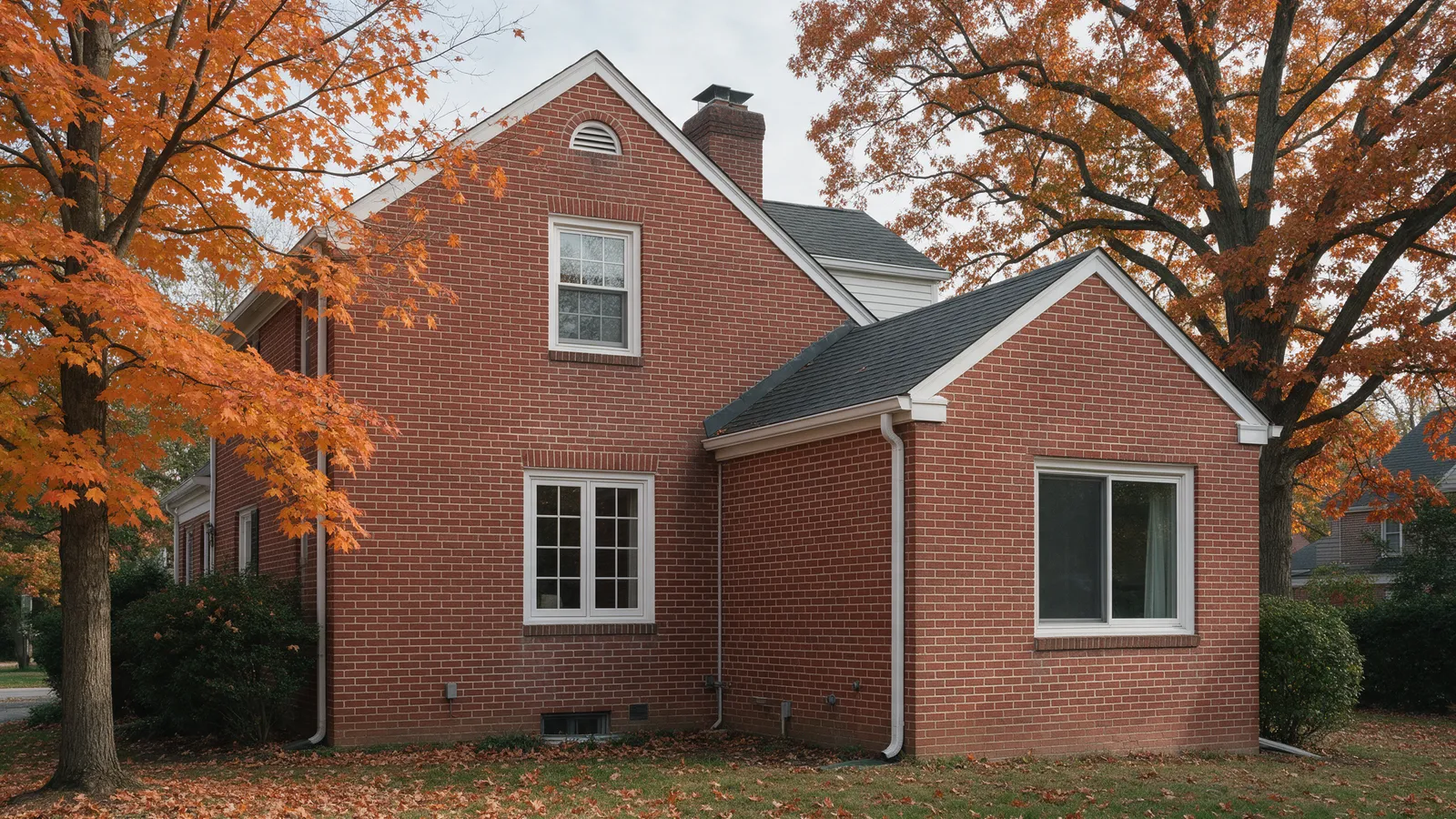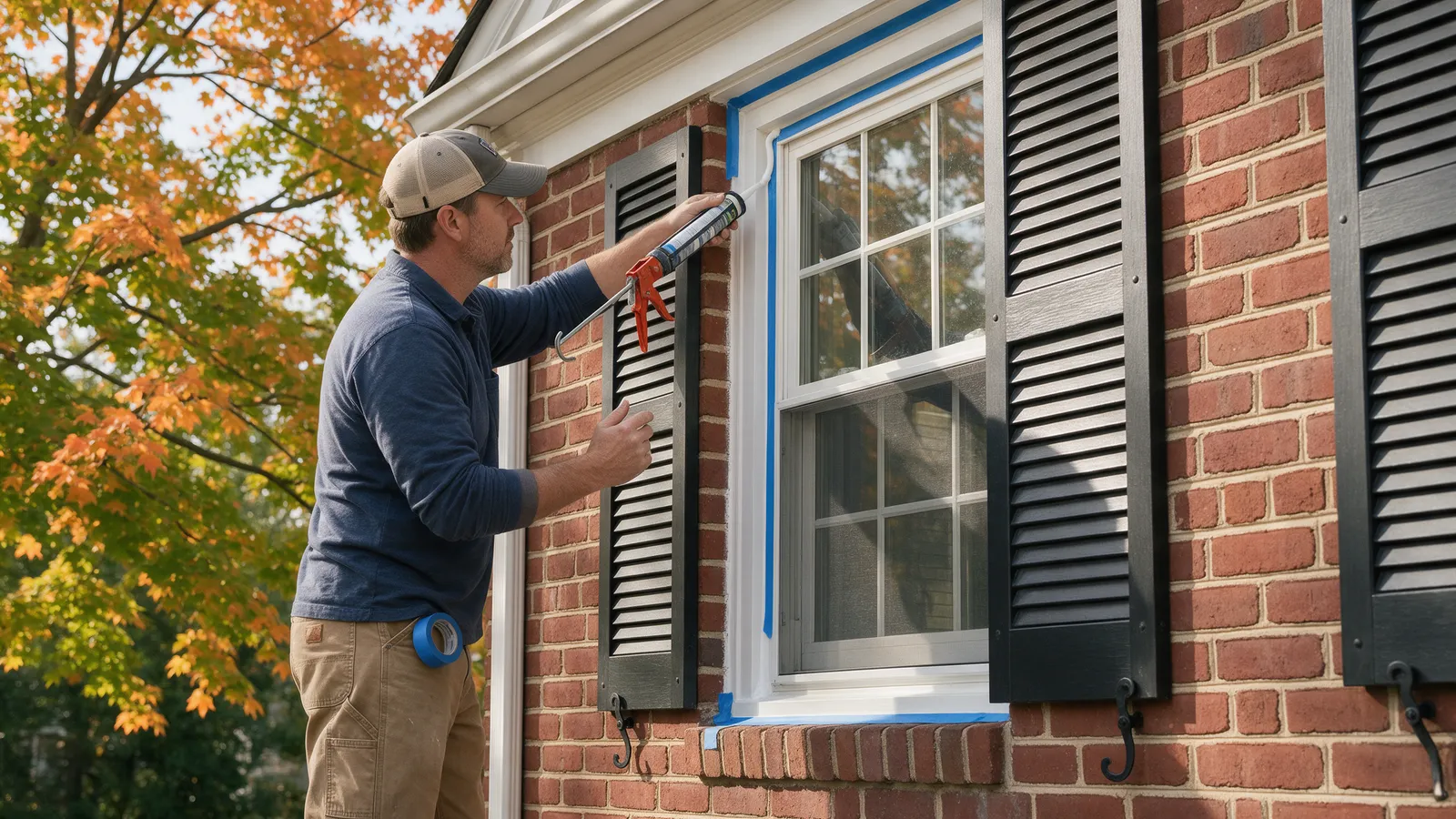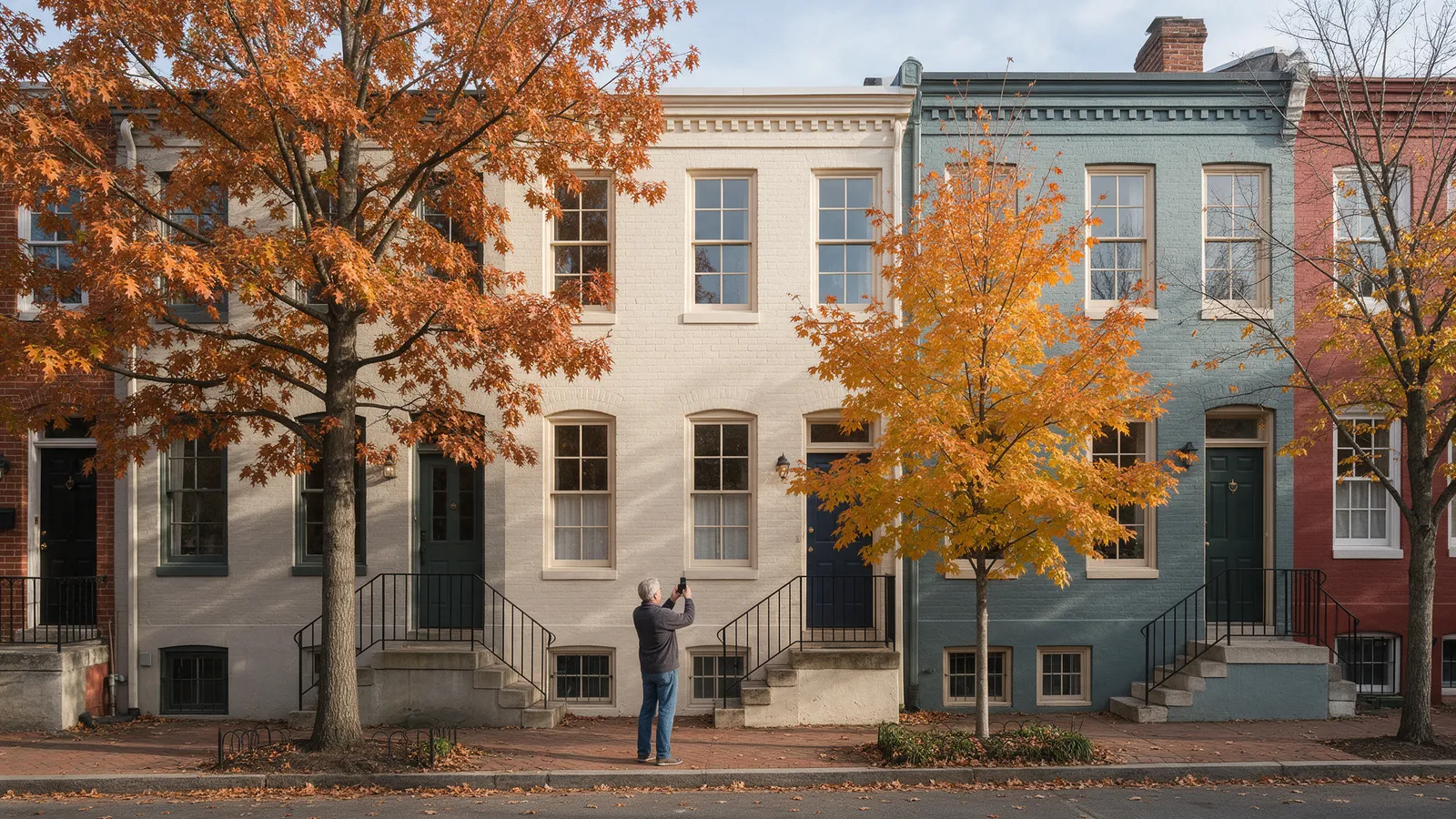
If your DC house sits in one of the city’s historic districts, a roof, window, or siding job has one extra step: historic preservation review. It isn’t as bad as its reputation, but only if you do things in the right order. Order the windows first and ask questions later, and you could be paying for them twice.
This guide walks you through confirming your status, working out which review path your project will take, and putting together an application that gets approved without back-and-forth. You can do almost all of it from your laptop and the sidewalk.
What you’ll need
- Your property address and square and lot number (it’s on your tax bill)
- A phone or camera for photos taken from the sidewalk
- Binoculars, for looking at the roof and upper windows from the ground
- Your contractor’s written scope, plus product spec sheets for any windows, roofing, or siding
- About an hour, spread over a couple of sittings
Step 1: Confirm whether your property is historic, and what kind
Look up your address on the DC Office of Planning’s PropertyQuest map before you do anything else. It shows whether the lot is in a historic district or is an individually designated landmark. DC has a lot of protected property. According to the DC Preservation League, which cites Historic Preservation Office data, the city has more than 27,000 contributing buildings in 70 historic districts, plus over 800 listings in the DC Inventory of Historic Sites.
There are three statuses to know, because they lead to different rules:
- Landmark: individually designated. These get the closest review.
- Contributing building in a historic district: the house adds to the district’s historic character. Most rowhouses in places like Capitol Hill, Mount Pleasant, and LeDroit Park fall here.
- Non-contributing building in a historic district: usually newer or heavily altered. Exterior work still goes through review, but the focus is on compatibility with the neighbors.
If you’re in Georgetown, there’s one more layer. Exterior work there also goes through the Old Georgetown Board, part of the U.S. Commission of Fine Arts, which publishes its own window guidelines.
Step 2: Sort your project into the right bucket
DC’s process isn’t one-size-fits-all. Decide which of three buckets your job falls into, because that tells you how much time and paperwork to plan for.
| Project | Typical path | Who reviews | What reviewers look for |
|---|---|---|---|
| Exterior painting of already-painted surfaces, storm windows, portable window AC | Routine; generally no permit | — | Nothing filed, but stay within “routine” |
| Repointing brick, in-kind roof replacement, in-kind gutters, downspouts, fascia, siding | Minor work; Historic Property Special Permit | HPO staff | Materials and profiles match what’s there |
| Replacement windows on street-visible elevations | Permit with staff review | HPO staff | Profile, dimensions, operation, pane layout, finish match the originals |
| Rear windows not visible from a public street | Permit with staff review | HPO staff | More flexible; ask what’s acceptable |
| Painting never-painted masonry on a landmark | Permit required | HPO staff | Whether paint harms the historic masonry |
| Additions, new construction, major visible changes | Major work | Historic Preservation Review Board, at a public hearing | Overall design compatibility |
The DC Preservation League sums it up: HPO staff handle “minor work,” including in-kind masonry repairs, roof replacements, and “unobtrusive” alterations, while larger additions and significant changes go to the Historic Preservation Review Board. Treat the table as a starting point, not a ruling. Your specific house and scope decide where you land.
Step 3: Photograph every elevation from the street
Visibility from a public street drives a lot of these decisions, so take photos from the sidewalk, the alley, and across the street before you talk to anyone. Shoot:
- The full front facade, plus a wider shot showing the houses on either side
- Each side and the rear, noting which ones you can see from a public street or alley
- Close-ups of the existing windows: the sash, the muntins (the bars between panes), and the trim
- The roof line and any visible roof slopes, using binoculars or a zoom lens from the ground
Photos showing your house in the context of its neighbors have long been a standard part of historic-district submissions, so you’ll use these again in Step 5.
Stay on the ground for all of this. Don’t climb onto the roof or go up a ladder above the first story to get a better angle. If you need roof photos you can’t get from the street, ask your roofer to take them, or hire an inspector who carries insurance.
Step 4: Talk to HPO staff before you order anything
This is the step that saves the most money. Email or call the Historic Preservation Office with your photos and a short description of the work before you sign for custom windows or order materials. HPO’s own guidance has long recommended talking with staff early, and the general email address is historic.preservation@dc.gov.
Questions worth asking:
- Is this in-kind work that qualifies for the special permit, or does it need a full permit review?
- For windows: which elevations count as “visible,” and which materials will you accept on each?
- Do you need drawings, or will photos and spec sheets do?
- Are there district-specific guidelines I should read?
Windows are the classic trap. HPO’s window guidance says replacements on street-facing elevations, or ones highly visible from a public street, have to match the original’s profile, dimensions, operation, pane layout, and finish. Vinyl can’t be approved on those elevations. Fiberglass, wood composite, and clad-wood units can work if they look like the original wood windows. Rear windows that aren’t visible from the street have more leeway. Often the best answer is repair: old wood sash can usually be reglazed and weatherstripped, and an interior or exterior storm window can recover a lot of the energy performance.
Step 5: Put together a clean application
Most residential exterior work is filed through the Department of Buildings (DOB). For in-kind roofing, siding, gutters, fascia, and brick pointing, DOB offers a Historic Property Special Permit. DOB’s page for it advises checking with the Office of Planning first about what your particular scope needs.
Submit a complete package the first time. A strong one includes:
- The context and elevation photos from Step 3
- A plain-language scope: what’s being removed, what’s going in, and where
- Product spec sheets showing material, color, and profile (window sections and shingle or slate specs)
- Drawings, if HPO asked for them. Window replacements and anything beyond in-kind work often need them.
- Your contractor’s license and insurance information
Incomplete applications are the most common source of delay. If HPO asks for more information, answer quickly and completely.
Step 6: Don’t start until the permit is issued, then keep it posted
Wait for the issued permit before any work starts. That includes “just pulling the old windows” or “just stripping the roof.” Once you have it, keep it posted on site where inspectors can see it.
Doing the work without a permit isn’t a shortcut. The DC Office of Planning says the city can post a stop-work order and issue civil fines, and you may owe a fine on top of the permit fee before the order is released. The bigger cost is having to redo work that wouldn’t have been approved. Taking out vinyl windows you’ve already paid for and installing compliant ones is an expensive lesson.
Step 7: Ask about the homeowner grant before you finalize the scope
DC’s Historic Preservation Office runs a Historic Homeowner Grant Program for eligible homeowners. In its 2025 flyer, the DC Preservation League lists grants of up to $50,000 for exterior restoration, with restoring original materials preferred over replacing them. There are eligibility rules, so email HPO and ask whether you qualify before you lock in the scope. It may change whether repairing your original windows or cornice makes more financial sense than replacing them.
Common mistakes to avoid
| Mistake | Why it hurts | Better move |
|---|---|---|
| Ordering windows before HPO weighs in | Custom units are often non-returnable | Get staff feedback on the product first |
| Assuming “in-kind” needs no permit | DC requires a permit for minor in-kind work on historic property | File the special permit |
| Swapping slate or metal for asphalt without asking | That’s a material change, not in-kind | Raise it with HPO as a design question |
| Painting brick on a landmark without checking | Never-painted masonry on landmarks needs a permit | Check your status in PropertyQuest |
| Letting the contractor “handle it” without checking | You’re the owner, and the property carries the consequences | Ask to see the issued permit before work starts |
When to stop and call a professional
Historic-district homeowners can handle the research and paperwork, but the work itself on a roof, an upper-story window, or a facade belongs to an insured, licensed contractor. Never walk on a roof, and never work from a ladder above one story. Older DC rowhouses are tall, often slate- or metal-roofed, and close to power lines along the alley.
Bring in a pro if:
- Your project involves an addition, a new opening, a rooftop deck, or anything visible that isn’t like-for-like. That’s likely Historic Preservation Review Board territory, and an architect who knows the process is worth the fee.
- You’re replacing slate, standing-seam metal, or a built-in gutter. These need specialized trades.
- You find rot in cornices, soffits, or framing. That may be structural.
- You’ve already received a stop-work order. Talk to a professional who has handled DC historic permits before you respond.
A contractor who regularly works in DC historic districts will know what HPO tends to approve and can put together the spec sheets and photos for you.
If you’re planning work on an older DC home, start with our guides to roofing, windows, and siding, and see the neighborhoods we serve on our areas page. Working across the river? Our explainer on Virginia’s re-roof permit exemption covers the very different rules there. And before any project, photograph your home’s exterior so you have a dated record of how it looked. Questions? Call DMV Exterior at 202-798-7663.
Common questions
Do I need a permit to replace my roof in a DC historic district?
Usually yes, even for a like-for-like replacement. DC treats in-kind replacement of roofing, siding, gutters, and similar items on historic property as minor work that still needs a permit. The Department of Buildings has a Historic Property Special Permit for these scopes, and the Historic Preservation Office reviews them at staff level, not at a public hearing.
Can I put vinyl replacement windows on my historic DC rowhouse?
Not on the street-facing side or on elevations clearly visible from a public street. The Historic Preservation Office's window guidance says vinyl can't be approved on those elevations. Wood, clad-wood, fiberglass, or wood-composite windows that copy the original's profile, pane layout, and operation can be. Rear windows that aren't visible from the street get more flexibility.
What work can I do in a DC historic district without a permit?
Routine maintenance generally doesn't need a permit. The DC Preservation League lists painting, installing storm windows, and adding portable window AC units as examples. Painting never-painted masonry on a designated landmark does need a permit, so check your property's status before you paint brick.
What happens if I do historic-district work without a permit?
The city can post a stop-work order and issue civil fines, and the DC Office of Planning warns you may owe a fine on top of the permit fee before the order is lifted. You may also be required to undo work that wouldn't have been approved, such as removing the wrong windows. Getting the permit first is almost always cheaper.
A note on safety
This guide is general information for homeowners, not a substitute for an on-site assessment. Anything that puts you on a roof, above a single story, or near power lines is work for an insured professional with fall protection.